
 KAWARTHA HILL
KAWARTHA MOON
HOMELESS MICRO VILLAGES
86it — A KAWARTHA HILL INITIATIVE
THE MASTER PLAN
A COMMUNITY-WIDE VISION & CALL TO ACTION
Peterborough, Ontario, Canada
A Tiny Movement. A Community of Hope. A Place to Begin Again.
Advocating for Tiny Homes. Building a Community. Restoring Hope.
OUR VISION
We envision a Peterborough where every human being has the opportunity to live in safety, dignity, and hope.
A Peterborough where homelessness is not ignored, hidden, or passed from one street to another, but addressed through compassion, housing, opportunity, and community action.
A Peterborough where people who have fallen upon difficult times are given a genuine opportunity to rebuild their lives.
A Peterborough that becomes known not for the suffering it tolerates, but for the lives it helps restore.
And perhaps, one day, a Peterborough whose light inspires communities across Canada and around the world.

PART ONE — OUR SPIRITUAL FOUNDATION
1. Our Spiritual Force & Guidance
The vision behind Kawartha Hill, Kawartha Moon Homeless Micro Villages, and 86it is inspired and guided by the Holy Spirit.
This is not a religious activity, religious organization, or religious program.
No religious belief, affiliation, worship, or participation is required of residents, employees, volunteers, community partners, or members of the public.
The Holy Spirit is the spiritual guiding force that inspires the founders’ vision, strengthens their purpose, and encourages wisdom, compassion, courage, humility, and service.
We believe spiritual inspiration must be expressed through practical action.
Our guiding principles are:
Compassion for those who are suffering.
Mercy toward those who have been forgotten.
Justice for those who are vulnerable.
Dignity for every human being.
Service without expectation of recognition.
Hope where despair has taken hold.
Action where words alone are insufficient.
Guided by the Holy Spirit. Driven by compassion. United in purpose. Put into action through love, service, and restoration of human dignity.
2. The Spiritual Guiding Vision — The Future Identity of Peterborough
We believe Peterborough has the potential to embrace a greater identity.
PETERBOROUGH — THE CITY OF ANGELS
PETERBOROUGH — THE CITY IN THE CLOUDS
PETERBOROUGH — THE CITY OF MERCY AND COMPASSION
PETERBOROUGH — THE CITY OF BROTHERLY LOVE
PETERBOROUGH — THE CITY OF HOPE
PETERBOROUGH — THE CITY OF LIGHT
These are expressions of our spiritual vision and aspirations—not official municipal designations.
We have a choice.
We can allow homelessness, hardship, and hopelessness to continue defining the experience of too many people.
Or we can work together to build a community that lifts people up.
Compassion over indifference.
Hope over hopelessness.
Brotherhood over division.
Light over darkness.
3. Peter Robinson and the Original Vision of a Beacon of Light
Peterborough carries a history connected to Peter Robinson, whose leadership helped establish the settlement in 1825.
We want to explore and honour the historical spirit of Peterborough as a Beacon of Light and renew that idea for our generation.
A beacon is meant to shine.
A beacon is meant to guide.
A beacon offers hope to those navigating darkness.
What does it mean for Peterborough to be a Beacon of Light today?
We believe that a city shines brightest when it stands with those who are struggling.
Jesus challenged injustice, religious hypocrisy, and the misuse of authority. His teachings call us toward truth, mercy, humility, love, and service.
For us, this is a spiritual inspiration to act—not a requirement imposed upon anyone.
A true Beacon of Light shines for everyone, especially those who have lost their way.
4. Peterborough — A Beacon of Light to the World
What if Peterborough could do more than transform its own future?
What if our community could inspire communities across Canada and around the world?
What if we demonstrated that homelessness can be confronted through compassion, cooperation, courage, and practical action?
A beacon does not keep its light to itself. It shines outward.
Through Kawartha Hill, Kawartha Moon Homeless Micro Villages, and 86it, we envision building a community that demonstrates what can happen when people unite around the dignity and well-being of every human being.
We may begin here in Peterborough, but the hope we build need not end here.
PETERBOROUGH — A BEACON OF LIGHT TO THE WORLD.
5. Our Scriptural Inspiration
The following passages express the spiritual values that inspire this vision:
Matthew 5:14–16 — A city set on a hill cannot be hidden; let its light shine.
Matthew 25:35–40 — Feed the hungry, welcome the stranger, and care for those in need.
James 2:14–17 — Faith demonstrated through meaningful action.
Micah 6:8 — Act justly, love mercy, and walk humbly.
Isaiah 58:6–12 — Share with the hungry, shelter those without homes, and rebuild what has been broken.
1 John 3:17–18 — Demonstrate love through deeds and truth.
Galatians 5:13 — Serve one another through love.
Jeremiah 29:7 — Seek the welfare and peace of the city.
Hebrews 13:16 — Do good and share with others.
Matthew 22:37–40 — Love God and love your neighbour.
These scriptures are offered as inspiration for the founders and those who personally share this spiritual foundation. Participation in the initiative does not require religious belief.
PART TWO — TWO POSSIBLE FUTURES
THE CHOICE IS OURS: 2026–2036
6. Peterborough 2036 — If We Do Not Act Now
This is a warning of what could happen if housing, prevention, and support fail to keep pace with growing needs.
Over the next ten years, Peterborough could face:
More individuals and families experiencing homelessness.
Greater numbers of people living outdoors, in vehicles, tents, or unsafe conditions.
Increased pressure on emergency services, hospitals, police, shelters, and outreach workers.
Worsening physical and mental health among people experiencing prolonged homelessness.
Greater pressure on neighbourhoods, public spaces, and local businesses.
Rising costs associated with repeated emergency responses.
Lost opportunities for education, employment, and community participation.
More people losing hope that their circumstances can ever change.
These outcomes are not inevitable predictions. They are potential consequences of failing to respond adequately.
We must not wait until the challenges become even more difficult to address.
7. Peterborough 2036 — If We Act Now
Imagine ten years of determined, sustained community action.
A growing network of safe, affordable, and supportive housing.
Fewer people living unsheltered.
A coordinated pathway from homelessness into stable housing.
Healthcare, mental-health, and voluntary addiction supports accessible to residents.
Paid employment opportunities through 86it.
Permanent affordable housing and ownership pathways.
Stronger cooperation among businesses, citizens, organizations, and service providers.
Greater stability and dignity for people rebuilding their lives.
Reduced reliance on emergency services for needs that housing and support can better address.
A community recognized for compassion, innovation, and meaningful action.
Imagine reaching 2036 and looking back at the homes built, lives restored, opportunities created, and suffering prevented because people chose to act.
8. The Choice Before Us
We can remain a Peterborough where homelessness continues to grow and hope becomes harder to find.
Or we can work toward a Peterborough known for:
MERCY. COMPASSION. BROTHERLY LOVE. HOPE. LIGHT.
We cannot promise that one initiative alone will solve homelessness.
But we can begin building a meaningful part of the solution.
The future is not simply something we inherit. It is something we help build.
PART THREE — OUR FIRST CALL TO ACTION
TO THE ORGANIZATIONS AND CITIZENS OF PETERBOROUGH
9. The Time Has Come for Our Community to Come Together
This is our first Call to Action.
Our first step is to reach organizations, businesses, community groups, charitable agencies, and citizens. We are not yet making a formal call upon the City of Peterborough or Peterborough County.
We are introducing a vision and inviting our community to help shape it.
We believe Peterborough has the heart, the people, the organizations, and the collective strength to create something extraordinary.
But a vision cannot become reality by standing alone.
We need one another. We need our community. We need people willing to stand together and turn compassion into action.
10. Who We Invite to Join Us
Community organizations and charitable agencies
We invite organizations to learn about this vision, share their expertise, and explore opportunities for collaboration.
Businesses and employers
We invite local businesses to consider contributing materials, resources, services, expertise, sponsorship, and future employment opportunities.
Builders, contractors, and tradespeople
We invite builders, architects, engineers, tradespeople, and suppliers to help explore practical, affordable, and sustainable construction.
Healthcare and social-service professionals
We invite healthcare providers, mental-health professionals, addiction-support services, and social-service agencies to explore the development of a coordinated support network.
Foundations, donors, and philanthropists
We invite community-minded individuals, charitable foundations, and potential donors to help identify funding opportunities and support development.
Volunteers and citizens
We invite residents to share this vision, help raise awareness, contribute their skills, and become part of a growing community movement.
People with lived experience
We especially invite people who have experienced homelessness to share their perspectives, ideas, and voices in shaping a community that respects their dignity, autonomy, and needs.
11. What We Are Asking
We are asking our community to:
Learn about this initiative.
Share the vision with others.
Help identify potential land and resources.
Explore partnerships and collaborations.
Contribute professional knowledge and practical expertise.
Identify funding opportunities.
Help develop a realistic, sustainable plan.
Participate in community conversations.
Stand alongside people experiencing homelessness.
Help us begin turning this vision into reality.
We are not asking everyone to have all the answers.
We are asking people to believe that change is possible and help us find a way forward.
One organization can make a difference. One business can make a difference. One citizen can make a difference. Together, we can change lives.
PART FOUR — KAWARTHA HILL, KAWARTHA MOON & 86it
12. Kawartha Hill — Leadership and Advocacy
Kawartha Hill is the community advocacy and leadership initiative advancing the vision, coordinating development efforts, building partnerships, and advocating for Kawartha Moon Homeless Micro Villages.
Its responsibilities will include:
Developing and communicating the vision.
Community engagement and outreach.
Partnership development.
Research and feasibility.
Advocacy and public awareness.
Organizational development.
Resource and funding exploration.
Coordination of the overall initiative.
13. Kawartha Moon Homeless Micro Villages
Kawartha Moon is the proposed housing and community-support initiative.
Its purpose is to develop a safe, organized, supportive residential community and create pathways from homelessness toward stable and permanent housing.
14. 86it — A Kawartha Hill Initiative
In partnership with Kawartha Moon Homeless Micro Villages
86it is a voluntary paid employment, cleanup, beautification, and community-restoration initiative for people experiencing homelessness and those transitioning out of homelessness.
These three initiatives are connected.
Kawartha Hill provides advocacy and leadership. Kawartha Moon provides housing and community support. 86it creates opportunities for paid work, contribution, and community restoration.
Together, they form one integrated vision.
PART FIVE — THE KAWARTHA MOON HOUSING COMMUNITY
15. A Community — Not an Encampment
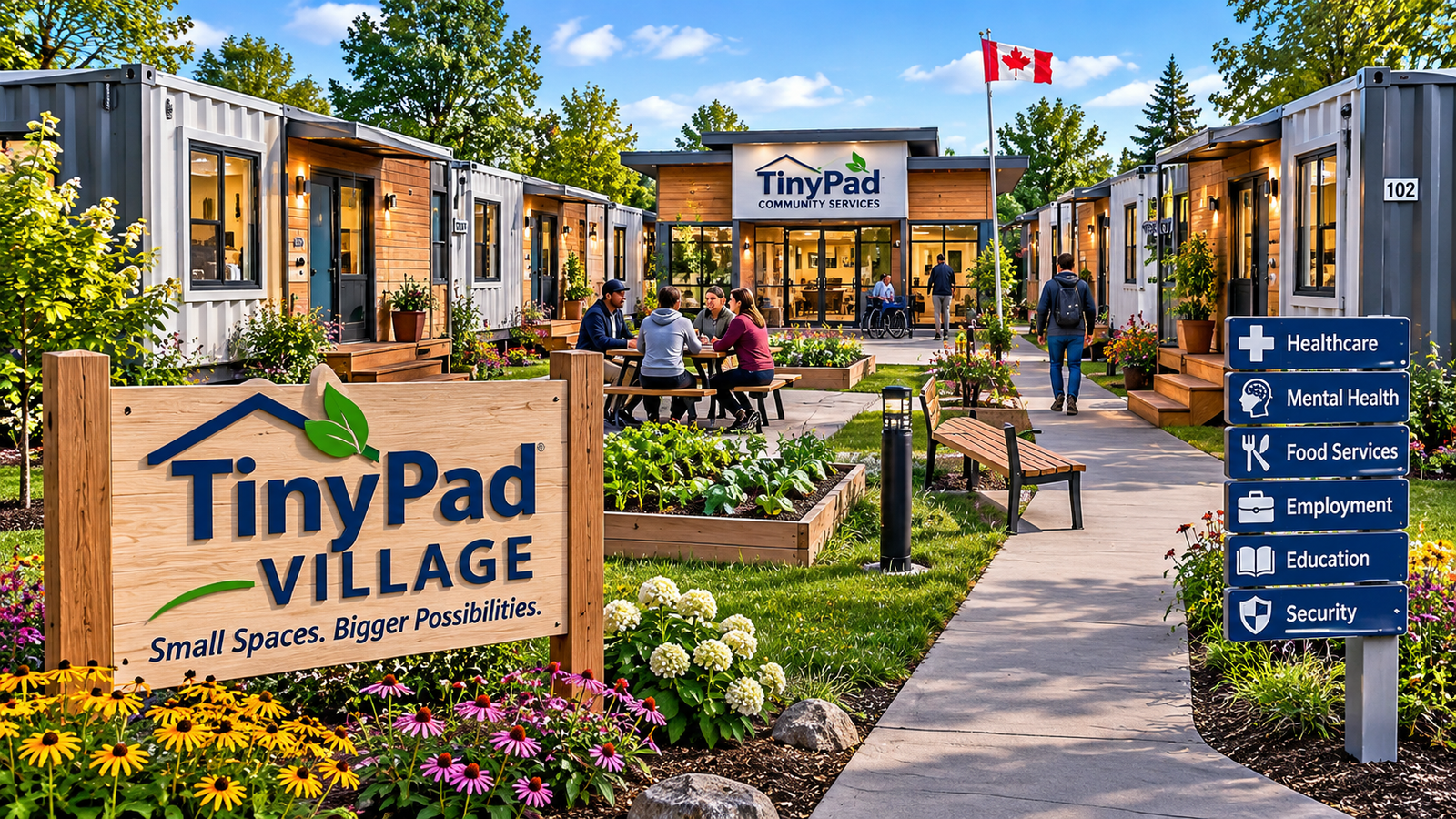
We envision a planned, organized, winterized, and service-supported residential community.
The initial Phase One target is up to 250 individual micro-homes, subject to land availability, feasibility, approvals, infrastructure, funding, and operating capacity.
This is an initial target, not a maximum limit on the long-term vision.
16. Housing Principles
Every home and the overall community should support:
Safety and privacy.
Winterized, weatherproof construction.
Appropriate heating and ventilation.
Electrical and fire safety.
Dignity and personal space.
Access to washrooms, showers, laundry, food, and essential services.
Individualized support.
A welcoming community environment.
Pathways to permanent housing.
Respect for autonomy and human rights.
Housing must not be conditional upon religious participation or compulsory employment.
17. Individual Micro-Homes
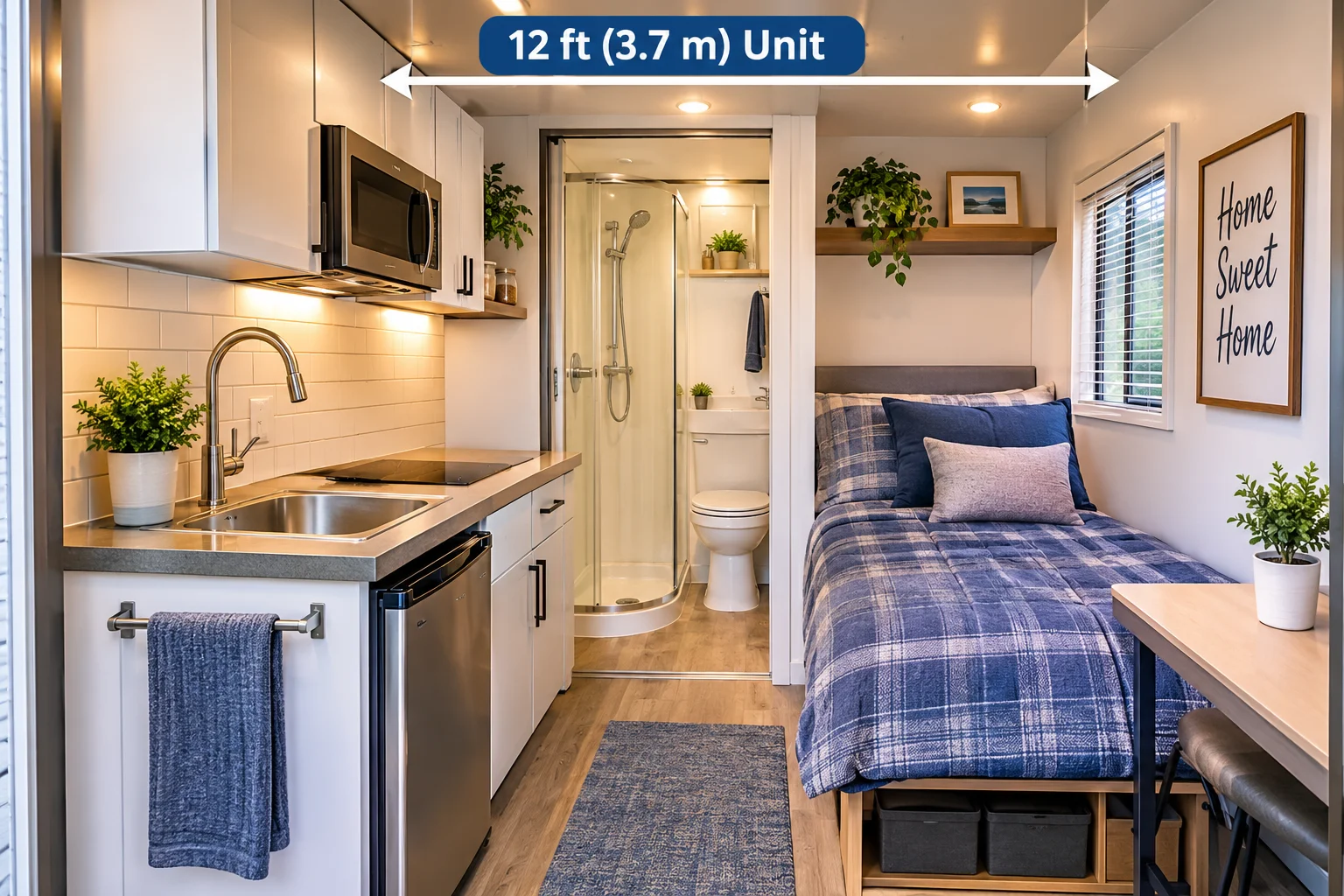
Each resident will have a private individual home designed to provide a safe and stable living environment.
Final specifications will require professional design, code compliance, accessibility review, fire-safety review, and cost assessment.
The long-term goal is to provide homes that are functional, dignified, durable, and capable of being expanded into a broader permanent-housing model.
18. Personal Gardens and Community Green Space
Where the site layout permits, individual homes will have small front or side gardens for flowers, herbs, vegetables, and other plants.
The larger community will include:
Community gardens.
Greenhouse opportunities.
Shared outdoor gathering spaces.
Recreation and walking areas.
Landscaping and environmental stewardship.
Gardening can provide meaningful activity, connection, pride, and access to fresh food.
19. Personalization and Resident Pride
Residents may be permitted to personalize their homes through painting, names, artwork, decorative designs, and other creative expression.
Reasonable guidelines will protect weatherproofing, structural integrity, safety, accessibility, maintenance, and respectful community standards.
The intention is to foster pride, belonging, personal expression, and ownership of one’s living space.
PART SIX — SITE DEVELOPMENT AND FEASIBILITY
20. Proposed Site for Investigation: 107 Park Street North
Kawartha Hill proposes exploring the former GE property at 107 Park Street North as a possible location.
The property is a significant redevelopment area, but availability, ownership interests, existing tenants, environmental conditions, heritage considerations, zoning, and redevelopment plans must be carefully reviewed.
The site is not secured, and no approval is assumed.
21. Site Assessment
A professional feasibility study must assess:
Actual available and developable acreage.
Ownership and land-access arrangements.
Existing leases and commitments.
Environmental conditions and remediation requirements.
Heritage restrictions.
Zoning and planning requirements.
Water and sewer servicing.
Electrical capacity.
Stormwater management.
Fire and emergency access.
Roads, pathways, and accessible circulation.
Construction and operating costs.
Potential future expansion.
If this property is unsuitable, the initiative will explore alternative sites.
22. Environmental and Public Safety
Environmental assessment and appropriate professional oversight are essential before development.
The project must not proceed without addressing contamination, soil conditions, hazardous materials, remediation, demolition risks, and applicable regulatory requirements.
The health and safety of future residents, workers, contractors, neighbours, and the wider community must be protected.
23. Site Capacity and Expansion
The 250-home target must be assessed against usable land, density, infrastructure, building footprints, shared facilities, access roads, green space, and emergency requirements.
The Master Plan envisions future expansion beyond Phase One where feasible.
Capacity must be established through professional site planning—not assumed from total acreage alone.
PART SEVEN — COMMUNITY FACILITIES AND SERVICES
24. Shared Essential Facilities
The proposed community will include facilities supporting everyday living:
Washrooms and showers.
Laundry.
Food bank and food storage.
Community kitchen and dining.
Healthcare and wellness centre.
Mental-health and support-service rooms.
Education and employment centre.
Recreation and community gathering areas.
Community gardens and greenhouse.
Resident administration and support offices.
Secure storage and equipment.
Accessible common areas and pathways.
Development will be phased according to need, feasibility, funding, and service capacity.
25. Food Security and Community Kitchen
Food security will be central to the community.
The proposed food program may include:
Food bank.
Community kitchen.
Shared dining space.
Food storage and refrigeration.
Meal preparation and distribution.
Community food recovery.
Garden-grown produce.
Greenhouse production.
Nutrition and food-handling education.
Culturally appropriate food options.
Potential partners may include Kawartha Food Share, local growers, grocery stores, restaurants, and charitable organizations. No partnership is assumed until confirmed.
26. Healthcare and Wellness
The initiative will seek to coordinate qualified healthcare services, including:
Primary healthcare.
Nurse practitioner and nursing services.
Community health outreach.
Mental-health counselling.
Addiction medicine and treatment referrals.
Pharmacy services.
Dental and foot-care referrals.
Occupational and physical therapy.
Nutrition services.
Preventive care.
Health education.
Medication coordination.
Potential partners may include local clinics, hospitals, community-health organizations, and qualified service providers.
27. Mental Health, Addiction, and Recovery
Support will be compassionate, individualized, and evidence-based.
Proposed services include:
Voluntary mental-health services.
Counselling and peer support.
Addiction-treatment referrals.
Medication-assisted treatment where appropriate.
Withdrawal-management referrals.
Harm-reduction education and supplies.
Naloxone and overdose-response training.
Relapse-prevention support.
Crisis-response coordination.
Housing will not be conditional upon abstinence.
Residents retain autonomy and dignity. Treatment is voluntary except where specific legal emergency criteria apply.
28. Education and Personal Development
The community will seek to support residents through:
Adult education.
Literacy and numeracy.
Digital literacy.
Employment readiness.
Resume and interview preparation.
Trade and vocational training referrals.
Financial literacy.
Budgeting and life skills.
Personal goal-setting.
Peer mentorship.
College and training opportunities.
The goal is to help residents rediscover and develop their abilities, experience, and aspirations.
PART EIGHT — SAFETY, ACCESS, AND PUBLIC PARTNERSHIP
29. Kawartha Moon Resident Identification and Controlled Access Program
The community will require a carefully designed controlled-access system.
The proposed program may include:
Resident registration.
Government-issued photo identification verification where available.
Issuance of a unique Kawartha Moon resident photo ID.
Secure access cards or scanning technology.
Controlled entrance and exit points.
Visitor check-in.
Contractor and service-provider identification.
Trained security personnel.
Written access and emergency policies.
Privacy safeguards and appropriate data retention.
The resident card is a community access credential—not a government identity document.
People without government identification will receive assistance obtaining it, and alternative lawful verification procedures will be established.
A lost or damaged card must not automatically terminate a person’s housing.
This is a residential community, not a detention facility.
30. On-Site Police Substation
Kawartha Hill proposes incorporating a dedicated modular police substation into the overall village design.
Possible functions include:
Community-policing presence.
Resident access to appropriate police support.
Coordination with outreach and service providers.
Safety meetings and community engagement.
Emergency-response coordination.
A designated point of contact.
Kawartha Moon may explore providing a modular building and dedicated space.
Peterborough Police Service would determine feasibility, operational requirements, staffing, authority, hours, communications, and approval.
The proposed substation is a community-safety partnership—not an enforcement mechanism directed at residents.
No police holding cell is proposed within Kawartha Moon.
31. Fire, EMS, and Emergency Services
The site must provide appropriate emergency response, including:
Fire access and vehicle circulation.
Fire protection and prevention.
Evacuation routes.
Smoke and carbon-monoxide detection.
Appropriate building separation.
Emergency lighting and signage.
Ambulance access.
Emergency-management procedures.
Coordination with fire services and emergency medical services.
All buildings must meet applicable codes, regulations, and professional standards.
32. Safety and Security
The proposed community will explore:
Appropriate lighting.
Controlled access.
Trained security staff.
Trauma-informed approaches.
De-escalation training.
Clear emergency procedures.
Incident reporting and review.
Resident rights and privacy.
Coordination with public safety services.
Safety must be achieved through a balance of security, respect, accountability, and community trust.
PART NINE — INTERNET, EMPLOYMENT, AND OPPORTUNITY
33. Shared Essential-Use Internet
A designated community service building or trailer may provide free shared internet access for essential and constructive use:
Employment searches.
Housing applications.
Education and training.
Government services and benefits.
Healthcare and telehealth.
Research.
Resume preparation.
Printing and scanning.
Communication with support providers.
34. Optional Resident-Paid Internet Offered By KawarthaNet.ca
Residents may have the option of individually paid internet service within their homes, subject to affordability and provider availability.
The initiative may explore compassionate internet programs and discounted service arrangements.
No provider partnership is assumed.
35. 86it — Paid Community Restoration
86it is designed to create voluntary paid work for residents experiencing homelessness and those transitioning out of homelessness.
Potential activities include:
Litter collection.
Public-area cleanup.
Pathway maintenance.
Garden and landscape work.
Seasonal cleanup.
Beautification.
Environmental restoration.
Appropriate maintenance projects.
Work must comply with labour laws and workplace-safety requirements.
Participation is voluntary, paid, and not a condition of housing or access to essential services.
36. Employment Structure and Funding
A sustainable operational model will require qualified staff, including potential:
Program manager.
Field supervisors.
Crew leaders.
Employment-support coordinators.
Safety and equipment coordinator.
Administrative support.
The staffing structure and budget must be developed through a formal feasibility and operational review.
Potential funding sources include government employment programs, municipal funding, grants, foundations, corporate sponsorship, donations, and workforce-development partnerships.
Residents must receive appropriate benefits counselling. Ontario Works and ODSP earnings rules must be verified individually and against current regulations.
Wages belong to the worker. Participation must respect individual abilities, accommodations, and choice.
PART TEN — THE PATHWAY FROM HOMELESSNESS TO PERMANENT HOUSING
37. The Kawartha Moon Housing Pathway
Stage One — Stabilization
A resident receives safe housing, basic necessities, and access to support.
Stage Two — Health and Well-Being
Residents may access healthcare, mental-health services, addiction support, and individualized case management.
Stage Three — Rebuilding
Residents may pursue paid employment, education, skills training, financial planning, and personal development.
Stage Four — Permanent Housing
Residents may transition to affordable rental housing, supportive housing, permanent tiny homes, independent housing, or appropriate ownership opportunities.
Stage Five — Continued Support
Residents receive help maintaining stability after moving into permanent housing.
38. Transitional Housing
The proposed transitional model may involve individualized stays of approximately 6–24 months, subject to program design and capacity.
Extensions may be appropriate when permanent housing is unavailable or individual circumstances require additional support.
No person should be forced into homelessness because a time limit has expired while a suitable housing pathway remains unavailable.
39. Permanent Affordable Housing
Transitional housing alone cannot end homelessness.
The long-term plan must include:
Permanent affordable tiny homes.
Affordable rental housing.
Supportive housing.
Housing First partnerships.
Rent supplements and housing assistance.
Prevention and eviction support.
Nonprofit and private affordable housing development.
Homeownership pathways where feasible.
40. The Kawartha Moon Home Buy-Back Program
A future program may explore opportunities for residents to progress toward ownership of an individual tiny home under a legally and financially sustainable arrangement.
If a resident later chooses to move, Kawartha Moon may explore purchasing the home back under fair, transparent, independently valued terms.
The home could then be refurbished and made available to another eligible resident.
This concept requires legal, financial, tax, insurance, financing, and housing review.
No ownership or buy-back guarantee is made at this stage.
41. The Kawartha Moon Home Transition Support Program
Support must continue beyond the village.
Potential services include:
Case management.
Healthcare coordination.
Mental-health support.
Voluntary addiction support.
Employment and education assistance.
Benefits and financial guidance.
Moving assistance.
Essential furnishings and household items.
Utility connection support.
Community connection.
Follow-up and stabilization.
Support may continue for 6–12 months or longer, depending on individual need and program resources.
The goal is not merely to move someone into housing. The goal is to help them remain housed.
PART ELEVEN — GOVERNANCE, PARTNERSHIPS, AND ACCOUNTABILITY
42. Governance
The initiative will require an appropriate legal and organizational framework.
Potential components include:
Nonprofit governance and incorporation.
Independent and qualified board oversight.
Meaningful lived-experience representation.
Resident advisory participation.
Indigenous engagement and partnership.
Financial controls and transparent reporting.
Conflict-of-interest policies.
Privacy and confidentiality policies.
Safeguarding and complaint procedures.
Staff and volunteer training.
Independent financial review or audit as appropriate.
43. Indigenous Partnership and Cultural Safety
The initiative will seek meaningful dialogue and partnership with Indigenous organizations and communities, including Nogojiwanong Friendship Centre and other appropriate Indigenous-led organizations.
The project recognizes the disproportionate impact of homelessness on Indigenous people and the importance of culturally safe, respectful, and community-led responses.
No Indigenous partnership or endorsement is assumed.
44. Potential Community Partners
The initiative may explore partnerships with:
City of Peterborough and Peterborough County, at a future stage.
Peterborough Police Service.
Peterborough Fire Services and emergency services.
Healthcare and community-health providers.
Mental-health and addiction-service organizations.
United Way Peterborough & District.
Kawartha Food Share.
Indigenous-led organizations.
Local charities and foundations.
Businesses and employers.
Contractors and trades.
Colleges and training providers.
Community volunteers.
People with lived experience.
These are potential partners, not confirmed commitments.
PART TWELVE — FUNDING AND SUSTAINABILITY
45. Funding Strategy
The initiative will explore:
Municipal land or site support.
Municipal infrastructure contributions.
Provincial housing and homelessness programs.
Federal housing programs.
Capital development grants.
Operating grants.
Charitable foundations.
Corporate and private donations.
Community fundraising.
Donated construction materials.
Professional services.
Equipment and supplies.
Employment-program funding.
Healthcare and service-provider contributions.
The previously discussed figures are preliminary illustrations only and are not a validated project budget.
46. Comprehensive Financial Planning
A complete budget must include:
Land acquisition or lease.
Environmental assessment and remediation.
Planning, zoning, and approvals.
Engineering and professional services.
Site preparation and infrastructure.
Housing construction.
Shared facilities.
Furnishings and equipment.
Staffing and service delivery.
Security and emergency systems.
Maintenance and repairs.
Insurance and administration.
Operating reserves and contingencies.
The project must distinguish capital costs from annual operating costs and establish a sustainable financial model before implementation.
47. Resident Contributions
Any future rent or resident contribution system must be affordable, individualized, legally compliant, and transparent.
Contributions must not prevent people from accessing essential housing or services.
Financial hardship must be addressed through appropriate safeguards.
PART THIRTEEN — IMPLEMENTATION ROADMAP
48. First 90 Days — Community Mobilization
Develop and refine the Master Plan.
Establish the core leadership and organizational framework.
Begin community outreach.
Invite organizations, businesses, and citizens to learn about the vision.
Identify potential partners and supporters.
Explore funding opportunities.
Begin preliminary site identification.
Gather perspectives from people with lived experience.
Develop a project-management and feasibility framework.
This is our current starting point: community awareness, support, and preparation.
49. Months 4–6 — Feasibility and Planning
Subject to progress and resources:
Identify potential land.
Undertake environmental and engineering assessments.
Review zoning and development requirements.
Develop preliminary site designs.
Assess water, sewer, electricity, roads, and emergency infrastructure.
Develop capital and operating budgets.
Establish governance and operational policies.
Confirm potential service-provider interest.
Prepare procurement and development plans.
50. Months 7–12 — Initial Implementation
Subject to approvals, funding, and readiness:
Prepare the initial site.
Begin construction or installation of the first housing phase.
Establish essential shared facilities.
Implement resident-support and safety policies.
Develop 86it employment operations.
Coordinate healthcare and emergency services.
Begin occupancy only when buildings and services are safe, approved, and ready.
Progress toward 250 homes will depend on feasibility and resources. This is an ambitious planning target, not a guaranteed completion date.
51. Year Two and Beyond — Expansion
Expand housing where feasible.
Strengthen healthcare and community services.
Develop permanent affordable-housing pathways.
Explore ownership and buy-back opportunities.
Expand employment and training opportunities.
Evaluate outcomes and adjust the model.
Pursue functional zero homelessness by 2036.
PART FOURTEEN — MEASURING SUCCESS
52. Outcomes That Matter
Success will be measured by meaningful outcomes, not simply the number of units constructed.
Potential measures include:
Number of people moving from homelessness into safe housing.
Number of residents remaining stably housed.
Number transitioning into permanent housing.
Number receiving voluntary healthcare and support.
Number participating in paid employment.
Employment retention and income outcomes.
Education and training participation.
Resident satisfaction and sense of safety.
Community engagement and partnerships.
Reduction in unsheltered homelessness.
Reduction in returns to homelessness.
Expansion of permanent affordable housing.
Financial transparency and operational sustainability.
Evaluation must be transparent, privacy-protective, and informed by people with lived experience.
PART FIFTEEN — OUR DECLARATION
We believe every human being deserves a safe place to live.
We believe homelessness is not solved by moving people from one street to another.
We believe housing, support, opportunity, and community are essential to rebuilding lives.
We believe people experiencing homelessness deserve dignity, not stigma; opportunity, not abandonment; and a pathway forward, not a permanent label.
We believe Peterborough can choose a better future.
We believe compassion must become action.
We believe hope must become a home.
We believe a city can become a beacon when its people stand together to help those in need.
We believe our spiritual inspiration must be expressed through love, service, and the restoration of human dignity.
We envision a Peterborough that does not keep its light to itself.
We envision a Peterborough whose example inspires others.
We may begin with a tiny movement.
We may begin with one home.
We may begin with one organization, one business, one citizen, one act of compassion.
But together, we can build something greater than any one of us.
PETERBOROUGH — THE CITY OF HOPE.
PETERBOROUGH — THE CITY OF LIGHT.
PETERBOROUGH — A BEACON OF LIGHT TO THE WORLD.
A tiny movement. A community of hope. A place to begin again.
KAWARTHA HILL
KAWARTHA MOON HOMELESS MICRO VILLAGES
86it — A Kawartha Hill Initiative
Guided by the Holy Spirit. United in compassion. Building hope through action.
OUR FINAL SCRIPTURE
MATTHEW 5:14 — THE CITY SET ON A KAWARTHA HILL
“Ye are the light of the world. A city that is set on an hill cannot be hid.”
— Matthew 5:14 (King James Version)
These words carry the meaning of the vision we hold for Peterborough.
A city set upon a hill is visible. Its light can reach beyond its own boundaries. It can guide, inspire, and give hope to others.
We believe Peterborough has the opportunity to embrace this vision—not merely as a place on a map, but as a community whose actions demonstrate compassion, mercy, brotherly love, and service to humanity.
Through Kawartha Hill, Kawartha Moon Homeless Micro Villages, and 86it, we aspire to help make this vision tangible.
Let our homes become places of hope.
Let our community become an example of compassion.
Let our actions shine for those who have been forgotten.
Let our light reach beyond Peterborough and inspire others to act.
PETERBOROUGH — THE CITY SET ON A HILL.
PETERBOROUGH — THE CITY OF HOPE.
PETERBOROUGH — THE CITY OF LIGHT.
PETERBOROUGH — A BEACON OF LIGHT TO THE WORLD.
“Let your light so shine before men, that they may see your good works, and glorify your Father which is in heaven.”
— Matthew 5:16 (KJV)
OUR PRAYER
Heavenly Father,
We come before You with hope in our hearts and a vision for our community.
We pray that You guide us through the Holy Spirit, giving us wisdom, discernment, courage, patience, and compassion.
May this vision be rooted in love and truth. May the right people come together. May organizations, businesses, citizens, and leaders recognize the opportunity to help.
Open doors that need to be opened. Help us find the resources, the land, the partnerships, and the people who can bring this vision to life.
Bless those who are experiencing homelessness. Bring comfort to those who are suffering, strength to those who are struggling, and hope to those who feel forgotten.
Help us build not merely homes, but a community where people can begin again.
May Peterborough become a beacon of mercy, compassion, brotherly love, hope, and light.
And may the work we undertake serve others with humility, dignity, and love.
In Jesus’ name, Amen.
OUR FINAL SCRIPTURE
MATTHEW 5:14 — THE CITY SET ON A HILL
“Ye are the light of the world. A city that is set on an hill cannot be hid.”
— Matthew 5:14 (King James Version)
These words carry the meaning of the vision we hold for Peterborough.
A city set upon a hill is visible. Its light can reach beyond its own boundaries. It can guide, inspire, and give hope to others.
We believe Peterborough has the opportunity to embrace this vision—not merely as a place on a map, but as a community whose actions demonstrate compassion, mercy, brotherly love, and service to humanity.
Through Kawartha Hill, Kawartha Moon Homeless Micro Villages, and 86it, we aspire to help make this vision tangible.
Let our homes become places of hope.
Let our community become an example of compassion.
Let our actions shine for those who have been forgotten.
Let our light reach beyond Peterborough and inspire others to act.
PETERBOROUGH — THE CITY SET ON A HILL.
PETERBOROUGH — THE CITY OF HOPE.
PETERBOROUGH — THE CITY OF LIGHT.
PETERBOROUGH — A BEACON OF LIGHT TO THE WORLD.
“Let your light so shine before men, that they may see your good works, and glorify your Father which is in heaven.”
— Matthew 5:16 (KJV)
Guided by the Holy Spirit. United in compassion. Building hope through action.
LET KAWARTHA HILL BE THAT HILL OF LIGHT BEFORE SOME OTHER PLACE CLAIMS IT.
GOD AND PETER ROBINSON BOTH APPROVE OF THIS UNDERTAKING.
LET US GRAB THAT LIGHT
Kawartha Moon Villages
A community of hope, housing, healing, restoration, and new beginnings.
FOLLOW THE LIGHT!
LET OUR LIGHT SHINE PETERBOROUGH!
HOPE BEGINS AT KAWARTHA HILL. THE GATEWAY TO THE WORLD.
 -
 -
 -
 -
 ----